Synthesizer
Hearing the electrochemical double layer
The electrochemical double layer, the thin layer of ions and solvent at an electrode surface, governs how batteries, fuel cells, sensors and electrolyzers work. It is also invisible, which makes its behavior hard to picture. So we made it audible.
How it works
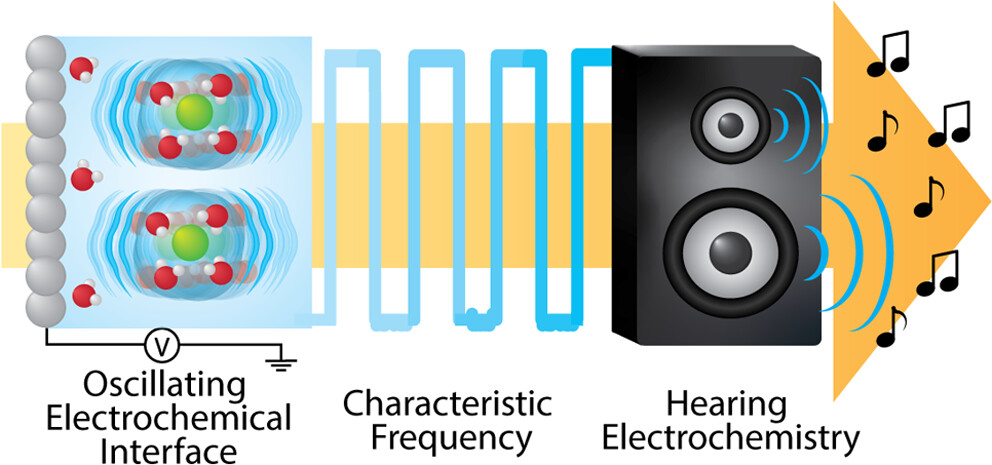
We built a relaxation oscillator circuit in which the double layer itself is the element that charges and discharges. As the ions at the interface rearrange, the electrode potential changes and the circuit switches back and forth. Connected to a speaker, this oscillation becomes a tone.
The pitch follows the behavior of the double layer. Changing the applied voltage, the concentration or identity of the electrolyte, or the electrode material shifts the frequency you hear.
Why listen?
Hearing how the tone changes gives an intuitive feel for how molecules move at an electrochemical interface. Trends that are abstract in a plot become something you can follow by ear, which makes the synthesizer a useful tool for teaching and for explaining double-layer behavior to anyone curious about electrochemistry.
Electrochemical Synthesis of Sound: Hearing the Electrochemical Double Layer,
ACS Central Science 2024, 10, 595–602.
Featured in C&EN: Giving voice to the electrochemical interface